Finger tape for climbing: H tape, ring tape and what the research says
How finger pulleys work, which taping method actually helps an injured pulley, and when tape is just for skin.
Climbers tape their fingers for two very different reasons: to protect skin on rough rock and plastic, and to support a finger after a pulley injury. The first one works exactly as you'd expect. The second one works less than most people think, and the method matters a lot.
- Skin protection, split tips, cracks: ring tape with 8 mm tape.
- Coming back from a pulley injury: H tape, plus a proper rehab plan.
- Healthy fingers: tape won't make you stronger or stop a pulley from tearing.
How finger pulleys work
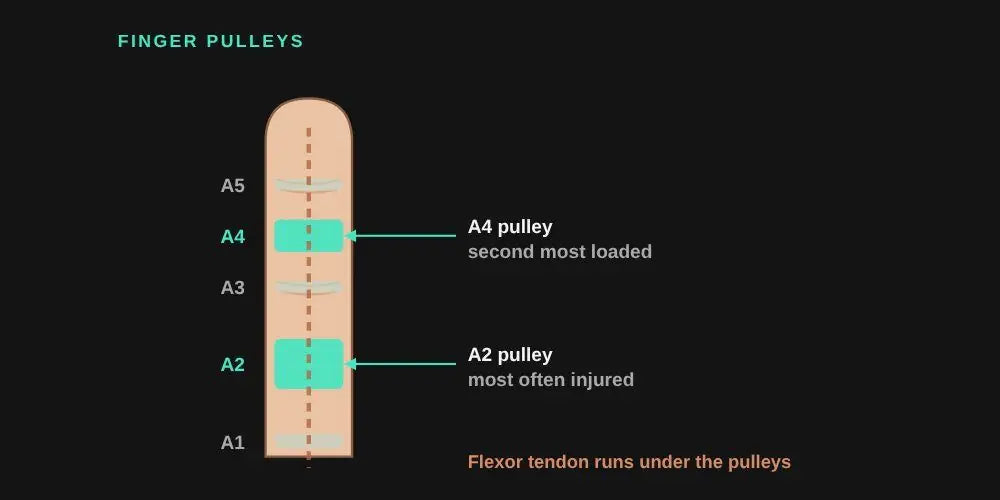
The tendons that bend your fingers run along the palm side of each finger. Five ring-shaped ligaments, called annular pulleys (A1–A5), hold those tendons close to the bone. When you crimp a small edge, the tendons pull hard away from the bone and the pulleys take the load.
The flexor pulley system is the most common injury site in climbing, and the A2 pulley at the base of the finger is the one that goes most often. When a pulley is partly or fully torn, the tendon lifts away from the bone. This is called bowstringing.
What the research says about taping
For years the standard advice was to wrap a few loops of tape around the base of the finger. Then researchers measured it:
- A biomechanical study found that circular taping is minimally effective in relieving force on the A2 pulley and probably doesn't prevent ruptures.
- A group of climbing doctors developed a different method, the H tape, that sits around the joint instead of on the bone.
- A 2022 systematic review concluded that taping might reduce bowstringing by 15–22%, with low to moderate certainty, and that taping has no effect on maximum strength in uninjured climbers.
- A separate test with H tape on the index, middle and ring fingers found no difference in crimp grip strength with or without tape.
So: tape can help an injured finger a bit, H tape is the better method for that, and tape on healthy fingers is about skin, not strength.
How to do H tape
- Cut the strip. Take about 10 cm of tape and cut into it from both ends, leaving a solid section in the middle.
- Position the middle. Bend the finger slightly. Put the solid middle section on the palm side, right under the middle joint.
- Wrap the lower ends around the base of the finger, below the joint, over the A2 area.
- Wrap the upper ends around the middle bone, above the joint.
- Check that you can still bend the finger and that the tip stays pink.
Ring tape for skin
For split tips, cracked skin between knuckles or a session on sharp rock, a couple of loops of 8 mm tape on the bone is all you need. Keep the joints free so you can still close your hand on small holds, and press the end down on the back of the finger.
When to stop and get it checked
FAQ
Should I tape to prevent pulley injuries?
The evidence doesn't support taping healthy fingers to prevent pulley tears. Warming up, gradual load and not crimping at your limit on a cold finger matter more.
Can I climb with buddy tape?
Buddy tape is meant for sprained joints in daily life. On the wall it stops you using the fingers independently. If you need it to climb, the finger probably needs rest.
This guide is general information, not medical advice. If you injure your finger, see a doctor or physiotherapist who works with climbers.
Keep reading
How to tape your fingers for BJJ: 3 methods that work
Ring tape, X tape and buddy tape explained step by step, with drawings, common mistakes and when to see a doctor.
What is zinc oxide tape, and why 8 mm?
Rigid vs elastic tape, what is actually in a roll, why the width matters for fingers and how to keep your tape sticky.